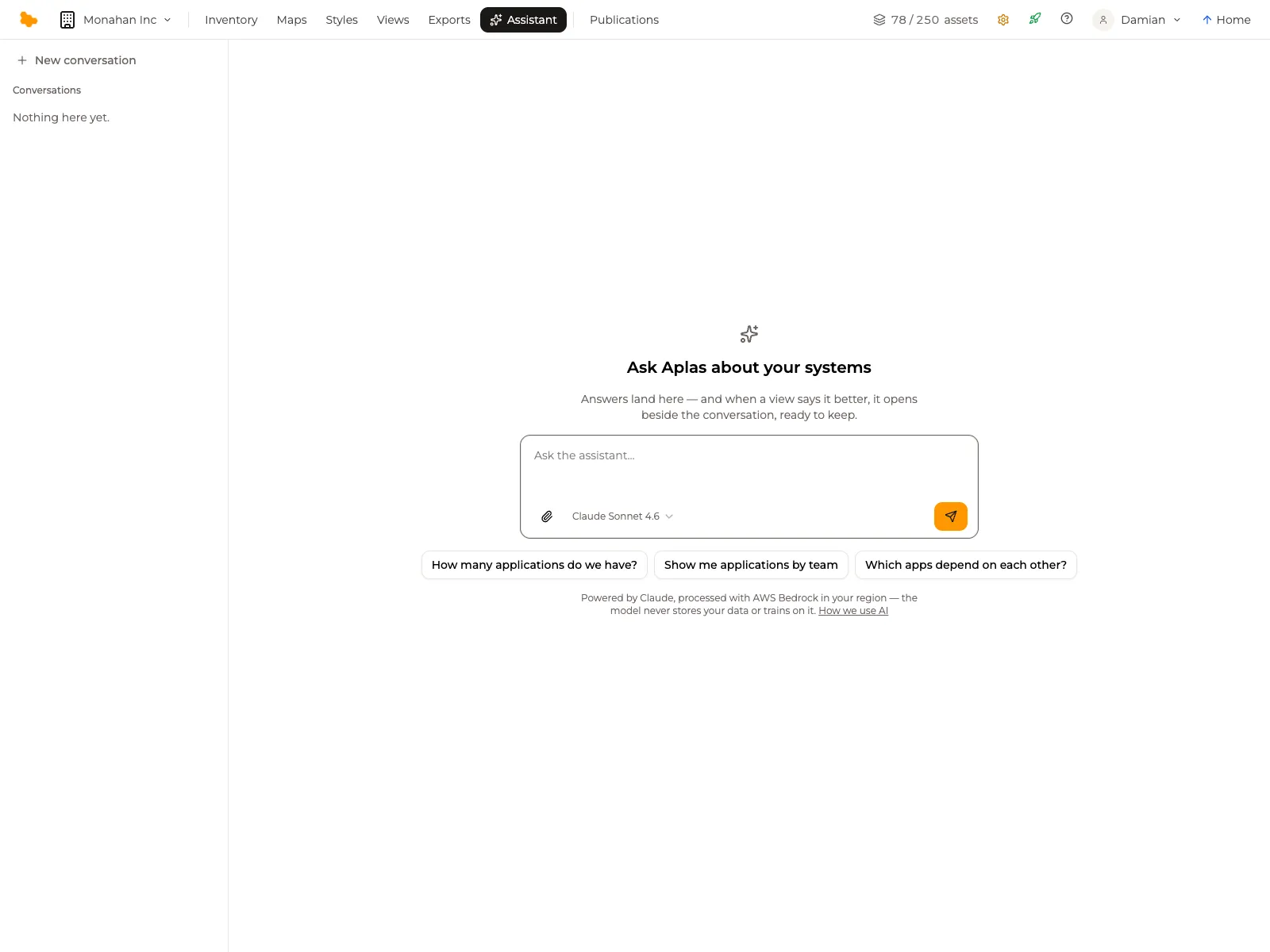
Ask Aplas about your systems
Ask in plain language
How many applications do we have? Show me applications by team. Which apps depend on each other? The assistant answers from your inventory — what you actually have, not a general model of software estates — and when a view says it better than a paragraph, one opens beside the conversation, ready to keep.
It will not invent an asset you do not have. Asked about something absent, it says so and offers to search more broadly rather than making something up.
Build in conversation
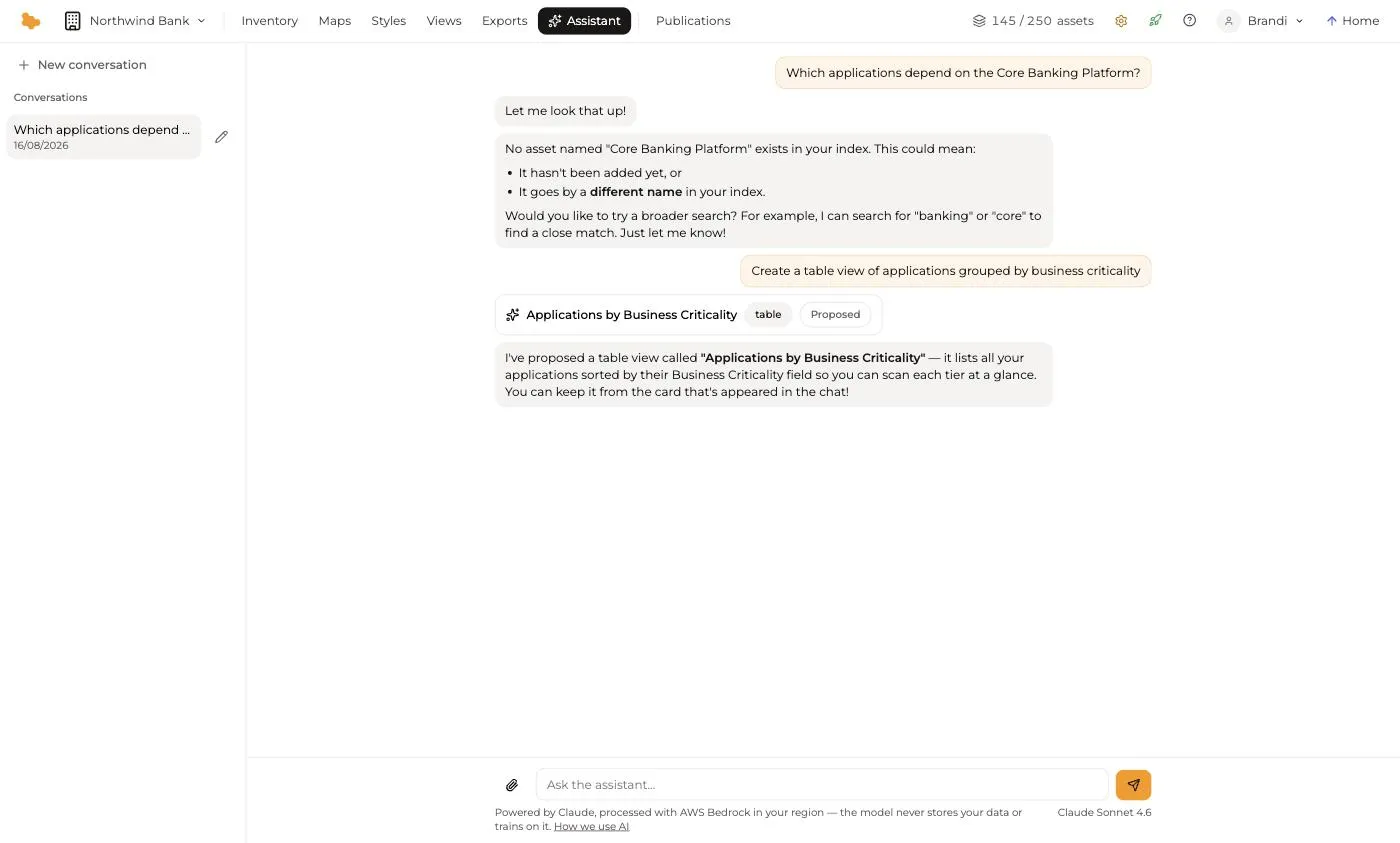
The assistant can propose changes — a new view, an import, new assets — and it never writes them itself. A proposal arrives as a card in the conversation, marked Proposed, with the result rendered beside it so you can see exactly what you would be keeping.
Nothing is saved until you keep it from that card. Discard it and the inventory is untouched. It is the same trust boundary the import pipeline uses: AI proposes, you confirm.
Runs on Claude, processed with AWS Bedrock in your organization's region. The model never stores your data or trains on it.
REST API v3
Everything in the inventory — workspaces, asset types, assets, relations, relationship types, views and publications — is reachable over a REST API, documented as an OpenAPI specification.
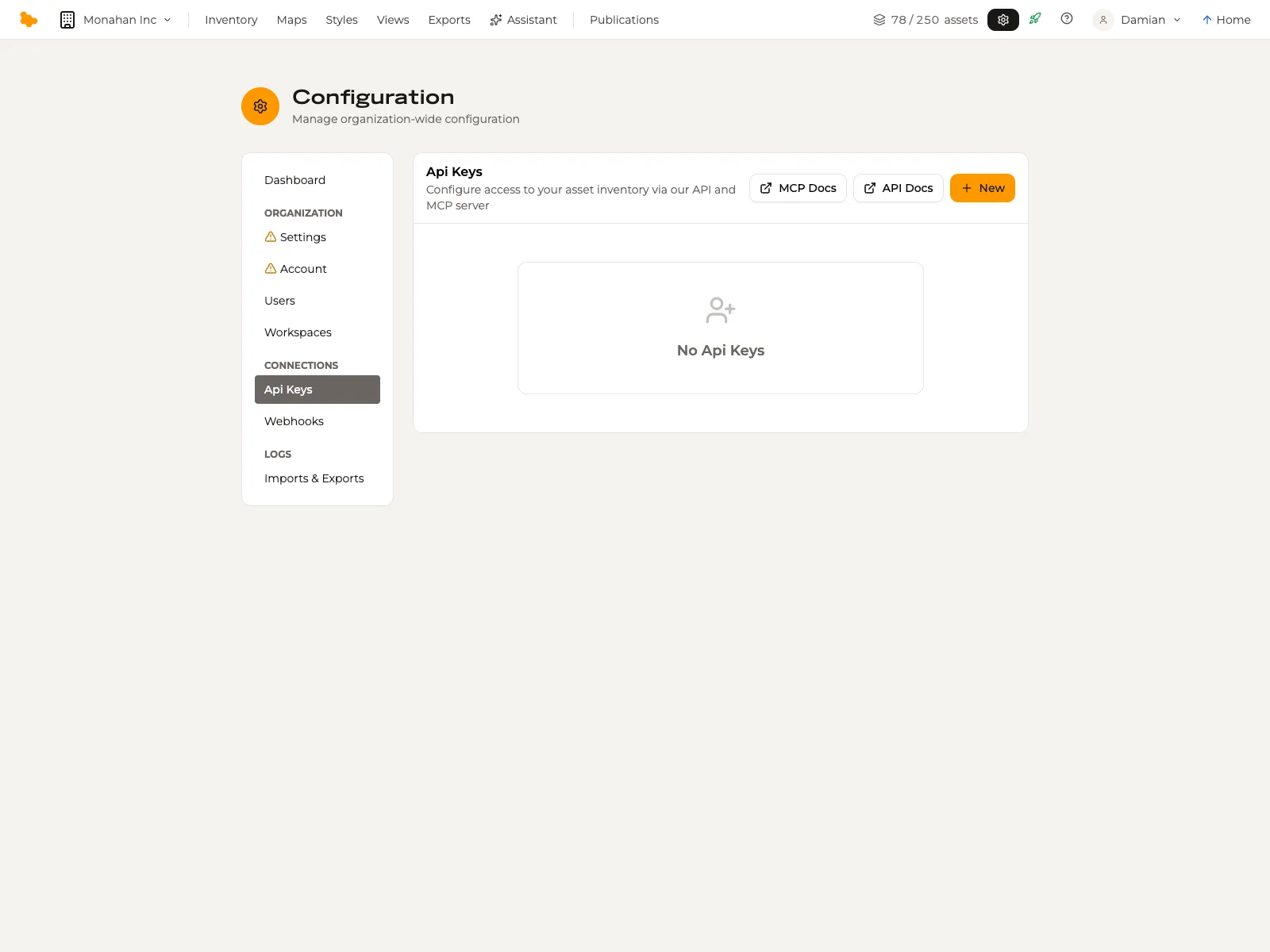
Keys live at Configuration > Api Keys. Each carries a role: a read-only key is refused anything that would write, so a reporting script can hold a credential that cannot change your catalogue. Keys are scoped to the organization they were created in, and requests go to the regional host your organization's data lives on.
MCP server
The Model Context Protocol connects an AI assistant to a data source. Aplas serves an MCP server beside the REST API, so Claude Code, Cursor or VS Code can query and maintain the same inventory the studio does — from your editor, in conversation.
The same API key authenticates it, with the same roles: a read-only key is the right default while you try it out, and lets an assistant answer questions about your estate with no possibility of altering it. Setup takes a couple of minutes.
On every plan
The assistant, the REST API and the MCP server are part of every plan, Free included. An API key is created by an organization owner or admin, and what it can reach follows its role, not your tier.