3D modelling the software of an architecture firm
Executive Overview
- Woods Bagot had an increasingly complex application landscape that was hard to track and explain to business leaders.
- Their first software map was published in 2018, including over 300 applications and integrations across 13 business domains.
- Aplas was able to deliver IT portfolio visibility to business, IT, security and risk teams. This resulted in accelerated digital programs and a reduction in technical debt.

Woods Bagot is a global architectural and consulting practice founded in 1905. It specialises in the design and planning of buildings across a wide variety of sectors and disciplines.
The Challenge
The Woods Bagot application landscape was increasing in complexity as they continued to digitise the firm's operations. Each addition or enhancement layered on new interdependencies that were hard to track and explain to the business leaders. This complexity was further compounded with data privacy compliance and security processes. As a result, it was becoming very challenging to move forward with confidence, while the risk of both changing the environment and doing nothing was adding up.
The Solution
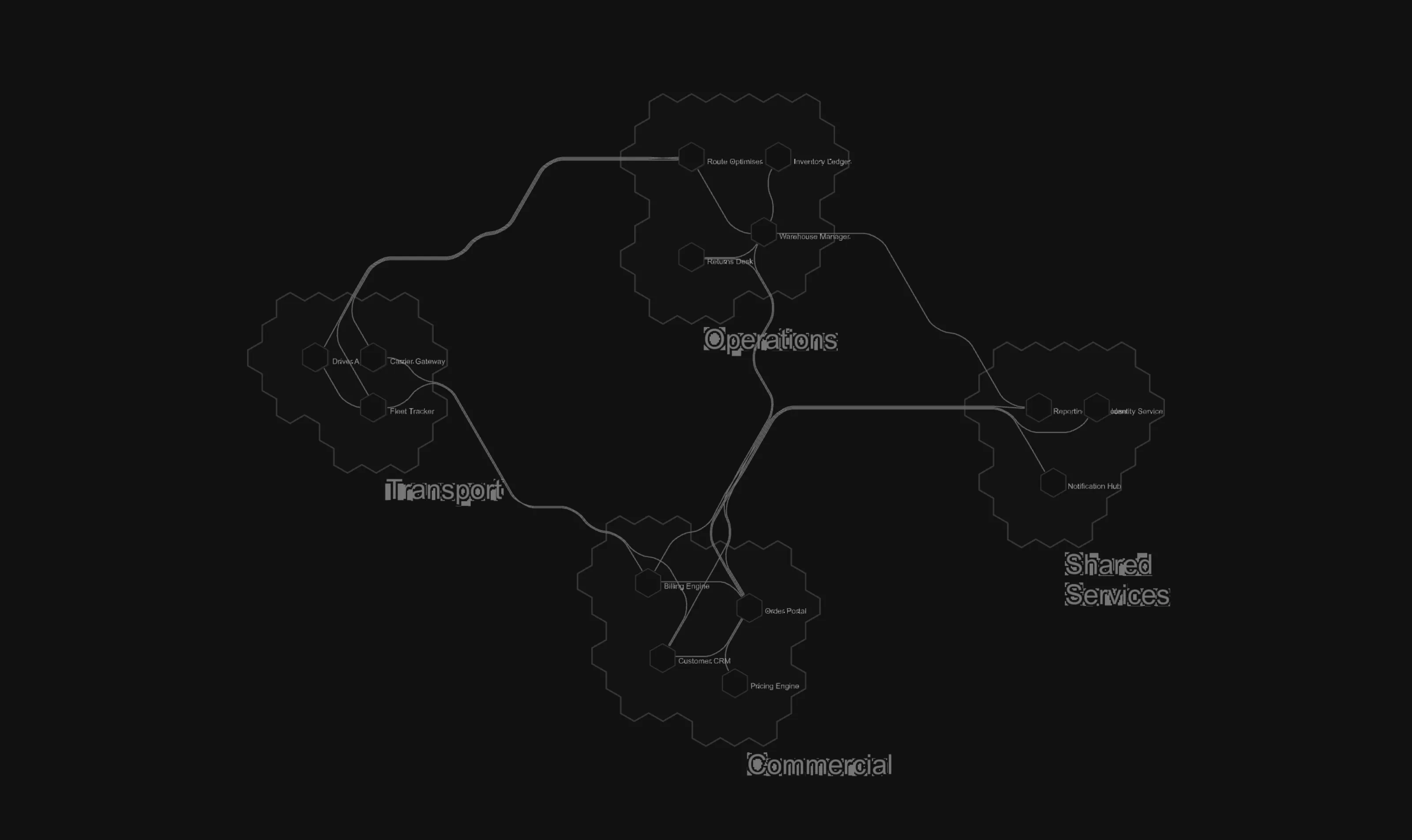
To solve the problem Woods Bagot needed a clear and visible catalogue of applications, data and interconnections. The process to catalogue took some time as they set about unearthing various in-house applications, SaaS tools, and data repositories. Throughout the process, they looked at how they could create a useful map of the systems and data that could be understood by business leadership, application developers, and external teams (such as security auditors).
The Success
By creating a highly visual software map, Woods Bagot could articulate the impact of change on systems and reduce the risk associated with data integration. Ultimately, this accelerated their digital programs and helped to reduce technical debt.
Going forward, the Woods Bagot software map provides the organization with a key reference to their digital nervous system. For example, in a recent ERP strategy, Aplas quickly identified the impact of upgrading various components. It remains a key tool that can clearly explain interdependencies, identify the domain owners, and show how data integration can impact change.
Aplas provides us with visibility across our entire software landscape, using a language that reduces complexity and risk. Across our cloud and traditional software, we can describe how our platform works to business, IT, security and risk teams.
The Details
248
Applications
74
Integrations
13
Business units
Connections
- ManageEngine: for real-time sync of requests and incidents.
- Confluence: for real-time sync of new/updated technical specs.
Use-cases
- Management (more info)
- Delivery
View a MapExplore a similar map in our demo organization.